Brian Roberts and Amy Hood: Their Careers and the Real Connection Between Comcast and Microsoft
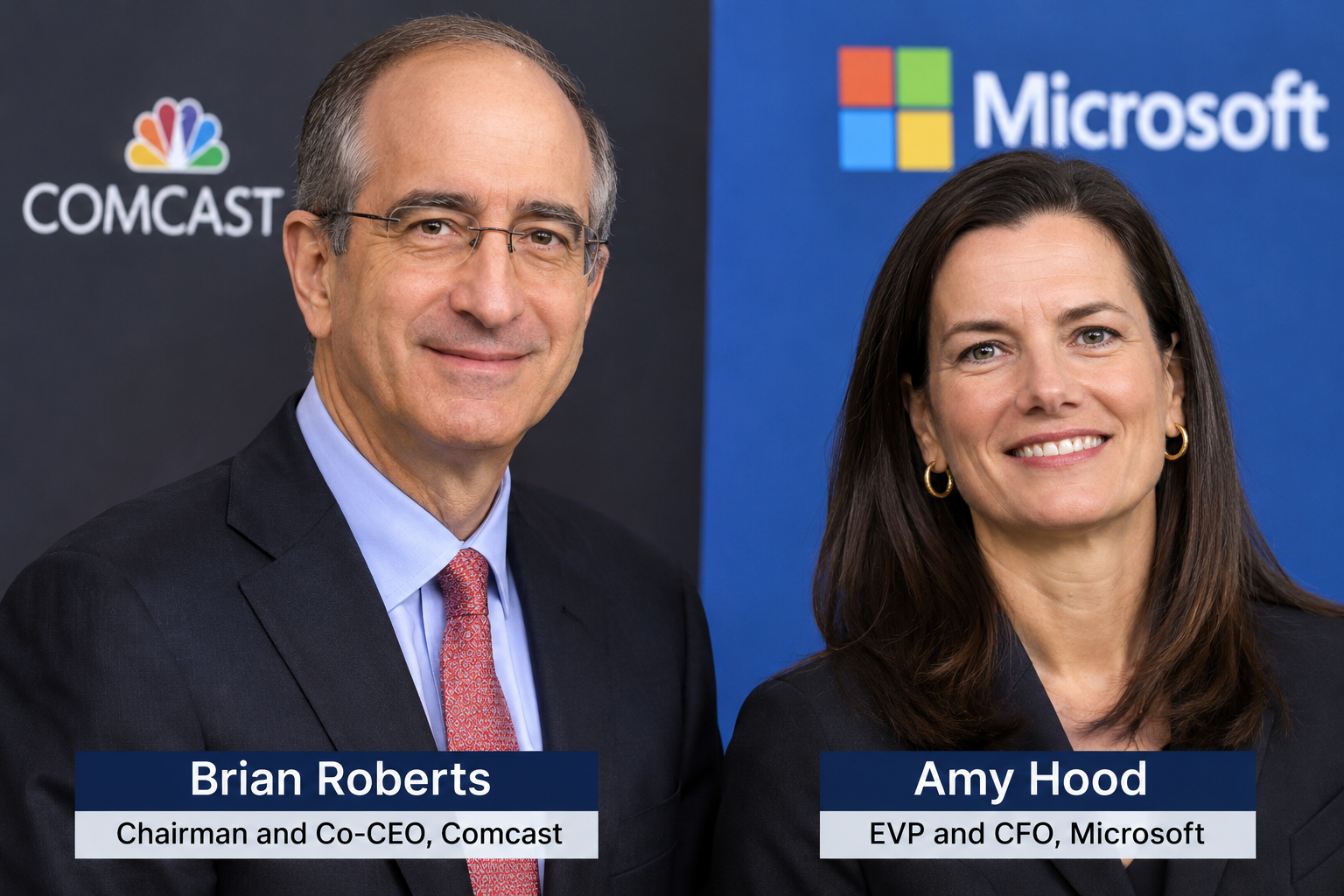
Brian Roberts and Amy Hood are senior American business leaders associated with two of the world’s best-known technology and media companies, but reliable public information does not establish them as relatives, spouses, or a direct executive partnership. Roberts is Chairman and Co-CEO of Comcast Corporation, while Hood is Executive Vice President and Chief Financial Officer of Microsoft. The most important historical link behind the Brian Roberts and Amy Hood search is actually between their companies. In June 1997, Microsoft invested $1 billion in Comcast to support high-speed data and video services over cable networks. Roberts, then Comcast’s president, publicly discussed the deal. Hood did not join Microsoft until 2002, five years later, so the 1997 transaction cannot accurately be described as a partnership between Roberts and Hood. Their careers nevertheless offer a useful comparison. Roberts helped transform Comcast through broadband, media, entertainment, and major acquisitions. Hood became Microsoft’s CFO in 2013 and has played a major financial and strategic role during its expansion in cloud computing, acquisitions, and artificial intelligence. As of 2026, both remain senior leaders at their respective companies.
Quick Bio
| Detail | Brian L. Roberts | Amy E. Hood |
|---|---|---|
| Full Name | Brian L. Roberts | Amy E. Hood |
| Company | Comcast Corporation | Microsoft Corporation |
| Current Role | Chairman and Co-CEO | Executive Vice President and Chief Financial Officer |
| Main Field | Media, connectivity, technology and entertainment | Technology and corporate finance |
| Joined Company | Joined Comcast in 1981 | Joined Microsoft in 2002 |
| Major Leadership Milestone | Named Comcast President in 1990 | Named Microsoft CFO in 2013 |
| Education | Wharton School, University of Pennsylvania | Duke University; Harvard Business School |
| Known For | Long-term leadership and expansion of Comcast | Financial and strategic leadership at Microsoft |
| Major Company Developments | NBCUniversal and Sky expansion | Cloud growth and major acquisitions including LinkedIn, GitHub and Activision Blizzard |
| Family Connection to Each Other | None established publicly | None established publicly |
| Direct Executive Partnership | None established publicly | None established publicly |
| Important Company-Level Link | Microsoft invested $1 billion in Comcast in 1997 | Microsoft invested $1 billion in Comcast before Hood joined Microsoft |
Who Is Brian Roberts?

Brian L. Roberts is one of the longest-serving leaders in the American media and communications industry. He is the son of Comcast founder Ralph Roberts and built his professional career inside the company. Comcast’s official biography states that Brian Roberts became company president in 1990, when Comcast had $657 million in annual revenue and served about 2.4 million customers. His leadership later covered a much larger organization spanning broadband, wireless, television, film, streaming, news, sports, international media, and theme parks. Comcast’s current leadership information lists Roberts as Chairman and Co-CEO alongside Michael J. Cavanagh. The company says Roberts partners with Cavanagh in managing Comcast’s businesses. Major transactions during Roberts’s leadership include the acquisition of NBCUniversal and the later acquisition of Sky, both of which broadened Comcast beyond its traditional cable operations. These facts help explain why Brian Roberts and Amy Hood can appear in discussions about influential corporate leaders even though they work for separate companies and hold different types of executive responsibilities.
Who Is Amy Hood?
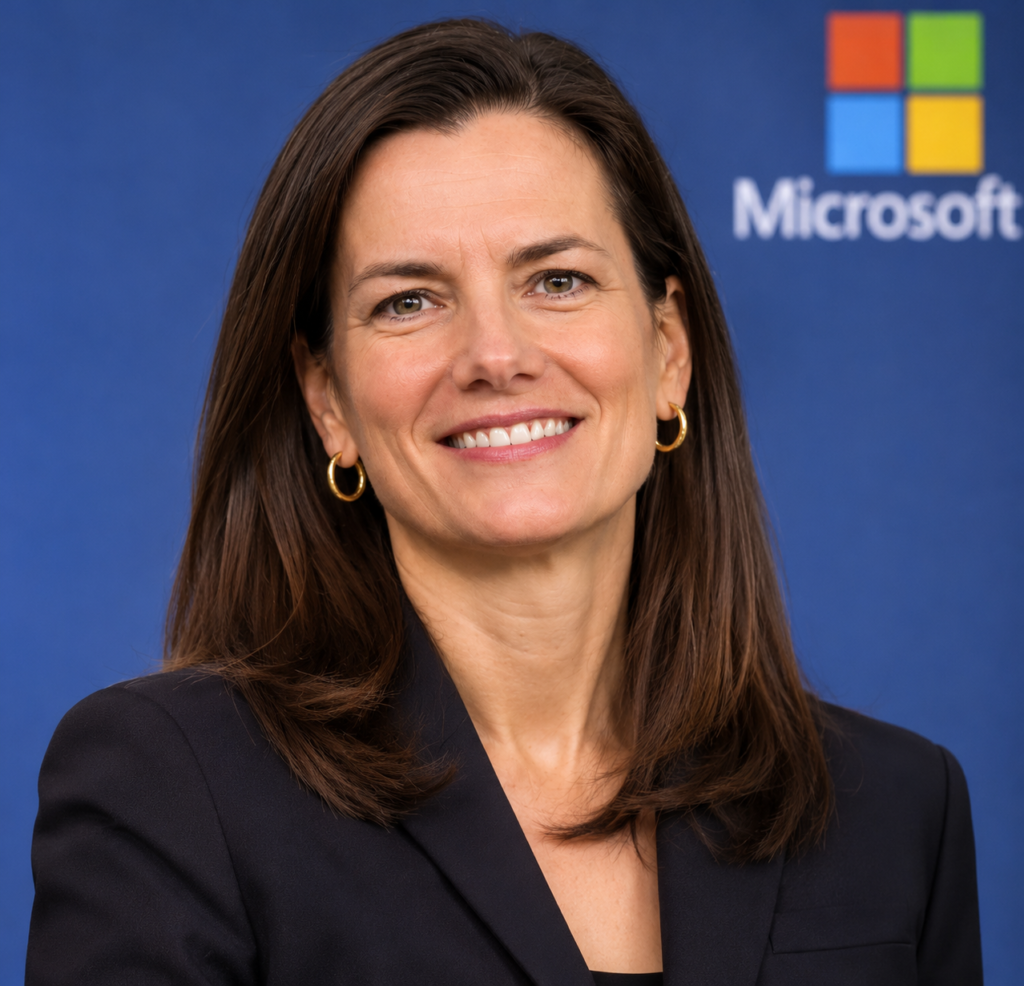
Amy Hood is Microsoft’s Executive Vice President and Chief Financial Officer. Microsoft states that she leads its worldwide finance organization, including accounting and reporting, financial planning and analysis, investor relations, treasury, tax planning, internal audit, global real estate, acquisitions, business development, and ventures. Hood joined Microsoft in December 2002 after working at Goldman Sachs in investment banking and capital-markets roles. Before becoming company CFO, she held several positions inside Microsoft, including work in investor relations, the Server and Tools group, strategy and business development, and finance leadership for the Microsoft Business Division. Microsoft appointed her CFO in May 2013. She earned a bachelor’s degree in economics from Duke University and an MBA from Harvard University. Microsoft also credits Hood with involvement in major acquisitions including LinkedIn, GitHub, and Activision Blizzard. As of the company’s 2026 annual report, she remains an executive officer and CFO. This current record is important when researching Brian Roberts and Amy Hood because it separates Hood’s actual Microsoft responsibilities from speculative relationships suggested by paired-name searches.
Are Brian Roberts and Amy Hood Related?
Reliable public information does not establish Brian Roberts and Amy Hood as immediate family members. Roberts’s official Comcast biography identifies his wife as Aileen and says they live in Philadelphia. Hood’s 2026 Duke University commencement profile identifies her husband as Max Kleinman and notes that Hood and Kleinman are minority owners of Major League Soccer’s Seattle Sounders FC. Those records provide clear public family context without suggesting a family relationship between Roberts and Hood. This distinction matters because search engines can place two executives together for many reasons. Their companies may share history, their careers may involve related industries, or publishers may compare their leadership. None of those factors establishes kinship. It would also be too broad to claim that no distant connection could possibly exist, because public biographies are not complete genealogical records. What can responsibly be said is that the reliable corporate and institutional sources reviewed do not identify Roberts and Hood as spouses, siblings, or immediate relatives.
The Real Historical Link Is Between Microsoft and Comcast
The strongest factual connection behind Brian Roberts and Amy Hood comes from corporate history rather than a personal relationship. On June 9, 1997, Microsoft and Comcast announced that Microsoft would invest $1 billion in Comcast. Microsoft described Comcast at the time as a major cable television operator and diversified telecommunications company. The investment was intended to help Comcast deploy high-speed data and video services through its cable network. Microsoft’s announcement quoted Bill Gates discussing the convergence of personal computers, television, broadband, data, and interactive services. Brian Roberts, who was Comcast president, also commented directly on the deal and said Microsoft’s investment supported Comcast’s vision of using cable networks as broadband infrastructure. The transaction therefore created a genuine and well-documented Microsoft-Comcast connection. It did not, however, create a Brian Roberts-Amy Hood partnership because Hood had not yet joined Microsoft. Comcast’s own corporate timeline also records Microsoft’s $1 billion investment under 1997.
Amy Hood Was Not at Microsoft During the 1997 Comcast Investment
Timing is essential to understanding Brian Roberts and Amy Hood accurately. Microsoft announced its Comcast investment in June 1997. Microsoft’s own biography and its 2013 announcement of Hood’s appointment as CFO state that she joined the company in December 2002. That places her arrival more than five years after the Comcast transaction. The 1997 announcement names Bill Gates and Microsoft corporate development executive Greg Maffei on Microsoft’s side, while Brian Roberts spoke for Comcast. It even stated that Gates would work closely with Roberts regarding Comcast’s strategic and technological direction. Hood is not part of that historical announcement because she was not a Microsoft employee at the time. This is an important correction to any online article that might use the Microsoft-Comcast relationship to imply that Hood personally negotiated the investment with Roberts. The companies have a documented historical connection, and Roberts personally appears in the record. Hood’s later senior position at Microsoft does not retroactively make her part of the 1997 transaction.
Why Microsoft’s Comcast Investment Mattered
The 1997 deal makes more sense when viewed through the technology environment of the period. Broadband internet was still developing, and cable networks offered a potential way to bring much faster data services into homes. Microsoft’s announcement framed its investment around the growing convergence of the internet, personal computers, television, video, and interactive services. Comcast had launched its first broadband cable modem service in 1996, according to its corporate timeline. Microsoft’s capital and technical expertise therefore aligned with Comcast’s effort to develop cable infrastructure beyond traditional television. The investment also illustrates Roberts’s early focus on broadband as an important part of Comcast’s future. A later Comcast account noted that Roberts had approached Bill Gates about investing in the company. That historical context is much more useful than inventing a direct relationship between Brian Roberts and Amy Hood. It shows a genuine connection between the organizations they represent today while keeping the people and dates accurate.
Brian Roberts Helped Turn Comcast Into a Broader Media and Technology Company
Roberts’s leadership is best understood through Comcast’s transformation. The company was once known primarily as a cable operator, but its portfolio expanded significantly through internal growth and major transactions. Comcast’s official biography highlights the 2011 NBCUniversal acquisition as a major step into media and entertainment and the 2018 acquisition of Sky as an expansion of its global presence. Today, Comcast operates businesses associated with Xfinity, Comcast Business, NBC, Telemundo, Universal, Peacock, Sky, and Universal Destinations & Experiences. This gives Roberts responsibilities across areas that once would have belonged to very different industries: broadband infrastructure, mobile services, television networks, streaming, film studios, news, sports, and theme parks. The company’s current leadership page lists him as Chairman and Co-CEO. For readers researching Brian Roberts and Amy Hood, Roberts therefore represents broad operational and strategic corporate leadership rather than a finance-only role. His career also demonstrates how connectivity companies evolved as broadband, content, streaming, and digital services became increasingly connected.
Amy Hood’s Role Is Broader Than Traditional Accounting
Calling Hood Microsoft’s CFO is accurate, but the title alone can understate the scope of her responsibilities. Microsoft says Hood oversees its worldwide finance organization, covering accounting and reporting as well as acquisitions, business development and ventures, planning and analysis, real estate, audit, investor relations, taxation, and treasury. Her career inside Microsoft also developed through strategic and operational roles before she became company CFO. In its 2013 announcement, Microsoft noted her involvement with the Skype and Yammer acquisitions while she worked in the Microsoft Business Division. Her current official biography adds later major acquisitions such as LinkedIn, GitHub, and Activision Blizzard. Microsoft also describes her as a strategic partner to CEO Satya Nadella during major shifts involving cloud computing and AI. This makes the Brian Roberts and Amy Hood comparison more meaningful. Roberts leads across a diversified media and connectivity company, while Hood helps guide capital allocation, financial discipline, investment, and strategy inside a global technology company.
Their Leadership Paths Are Fundamentally Different
The two executives reached senior leadership through very different routes. Roberts joined the company founded by his father and developed his career through Comcast as the business expanded. He became president in 1990 and later moved into the company’s highest leadership positions. Hood built her career first in finance outside Microsoft, working at Goldman Sachs before joining Microsoft in 2002. She then moved through investor relations, strategy, business development, and divisional finance roles before becoming CFO in 2013. This distinction makes Brian Roberts and Amy Hood a useful leadership comparison without suggesting that their careers were intertwined. Roberts’s path centers on long-term corporate stewardship, operating leadership, acquisitions, and the expansion of a family-founded company into a global corporation. Hood’s path centers on finance, strategic decision-making, capital allocation, acquisitions, and supporting a large technology company through major business-model transitions. Both reached the highest levels of American corporate leadership, but they did so through different professional disciplines.
Amy Hood Has Remained Microsoft CFO Through Major Technology Shifts
Hood became Microsoft CFO in 2013, shortly before Satya Nadella became CEO in 2014. Her tenure has therefore covered a major period of change for the company. Microsoft’s current biography highlights cloud computing and the AI era as major technological shifts during her time in leadership. It also identifies her involvement in acquisitions that significantly expanded Microsoft’s portfolio. The company’s 2026 annual report continues to list Hood as Executive Vice President and Chief Financial Officer, and Microsoft’s October 2026 fiscal first-quarter earnings conference call again identified her in that role alongside Nadella. Her continued presence provides a current factual basis for discussing her influence rather than relying on older profiles. Brian Roberts and Amy Hood are both examples of executives whose tenures span long periods of technological change, but Hood’s contribution is most clearly documented through finance and strategy at Microsoft.
Roberts’s Current Comcast Role Changed in 2026
Current information is particularly important for Roberts because his title has evolved. Comcast’s leadership materials now identify Brian Roberts as Chairman and Co-CEO rather than simply Chairman and CEO. Michael J. Cavanagh is also listed as Co-CEO. Comcast states that Roberts partners with Cavanagh to manage all aspects of the business. This makes older biographies that describe Roberts only as Comcast’s sole CEO incomplete for a 2026 article. His chairmanship and long-term influence remain significant, but the company now uses a shared chief executive structure. That detail also demonstrates why current research matters for a paired keyword such as Brian Roberts and Amy Hood. Both executives have long careers, and an article assembled from old biography pages can easily miss changes in responsibilities. Microsoft’s 2026 reporting still identifies Hood as EVP and CFO, while Comcast’s current corporate information reflects Roberts’s Co-CEO position.
Both Executives Have Experience With Major Corporate Transactions
Large transactions are one meaningful area for comparing Brian Roberts and Amy Hood. Roberts’s Comcast biography highlights acquisitions that fundamentally changed the company, especially NBCUniversal and Sky. Those deals extended Comcast from connectivity deeper into entertainment and international media. Hood’s official Microsoft biography highlights her strategic involvement in acquisitions including LinkedIn, GitHub, and Activision Blizzard. The executives did not perform identical jobs in those transactions. Roberts has served as Comcast’s top corporate leader, while Hood’s responsibilities come from her role as Microsoft’s senior financial executive and strategic partner. Still, both careers show how acquisitions can reshape large corporations. Major transactions require more than agreeing on a purchase price. They involve financing, strategic fit, integration, regulatory considerations, long-term capital planning, and decisions about how the acquired business supports the company’s future. The comparison is useful, but there is no need to turn it into evidence that Roberts and Hood personally collaborated on these deals.
Comcast and Microsoft Have Continued to Cross Paths as Technology Evolved
The 1997 investment was not the only historical point where Comcast and Microsoft appeared together. Comcast’s corporate timeline records that in 2004 the companies signed strategic agreements aimed at improving the user interface and functionality of Comcast services. That history reflects the broader relationship between software and connectivity companies as television, internet services, digital interfaces, and home networking evolved. It also helps explain why Brian Roberts and Amy Hood can be associated through company history without being direct partners. By 2004, Hood had joined Microsoft, but the existence of a corporate agreement does not by itself establish her personal participation in it. Responsible research should distinguish company activity from individual executive involvement. Unless a primary source names an executive in a transaction or project, it is safer to describe the relationship at the company level. Comcast’s timeline supports a history of interaction with Microsoft; it does not establish that every senior leader at both companies personally worked together.
Their Current Companies Operate in Different but Increasingly Connected Markets
Comcast and Microsoft have different core identities, yet modern technology has made their markets increasingly interconnected. Comcast combines connectivity with media, entertainment, streaming, and consumer services. Microsoft operates across software, cloud infrastructure, productivity tools, gaming, devices, cybersecurity, AI, and enterprise technology. A household or business can therefore use Comcast connectivity to access Microsoft cloud or software services, even though the companies serve different roles in that experience. This broader digital ecosystem provides useful context for Brian Roberts and Amy Hood. Roberts helps lead a company that controls major connectivity and content assets. Hood leads the financial organization of a company whose software and cloud infrastructure depend on global digital connectivity. Their jobs are not the same, and there is no basis for describing them as a joint leadership team. The connection is better understood through the industries and corporations they help manage.
Both Have Strong Links to Sports, but in Different Ways
An interesting secondary similarity involves sports. Roberts’s Comcast career includes a company with substantial sports and entertainment interests, while he personally competed in squash at a high level. Comcast’s official biography describes him as an All-American in squash and notes that he competed six times in the Maccabiah Games in Israel. Hood also has a documented sports connection outside her Microsoft CFO responsibilities. Duke University’s 2026 commencement program states that Hood and her husband, Max Kleinman, are minority owners of Major League Soccer’s Seattle Sounders FC. These facts provide another legitimate comparison between Brian Roberts and Amy Hood, but again they should not be stretched into a shared sports venture. Roberts’s sports connections arise through both personal athletics and Comcast’s broader entertainment businesses, while Hood’s public sports ownership is associated with the Sounders.
There Is No Evidence They Are Spouses
The suggestion that the two executives might be married can be addressed directly. Comcast’s biography states that Roberts and his wife, Aileen, live in Philadelphia. Duke University’s 2026 profile of Hood states that Hood’s husband is Max Kleinman. These institutional sources make it clear that Brian Roberts and Amy Hood should not be described as spouses. This may appear like a simple point, but it is useful for obscure paired-name searches because readers often arrive looking for a relationship explanation. Search results can place two names beside each other without explaining why. That can lead to assumptions about marriage, family, or partnership. In this case, the reliable public biographies support separate family relationships.
There Is No Established Direct Business Partnership Between Them
The evidence also does not support describing Roberts and Hood as direct business partners. Roberts has a genuine historical connection with Microsoft because he represented Comcast during the 1997 Microsoft investment and was explicitly quoted in Microsoft’s announcement. The announcement even said Bill Gates would work closely with Roberts on Comcast’s strategic and technological direction. Hood’s Microsoft career began later. Her current responsibilities include acquisitions and business development, but that does not establish a personal partnership with Roberts. The distinction is essential to the Brian Roberts and Amy Hood search. There is a documented relationship between Comcast and Microsoft. There is documented direct involvement between Roberts and Microsoft leaders during the 1997 transaction. There is also extensive documentation of Hood’s later leadership at Microsoft. What the reviewed primary sources do not establish is a major Roberts-Hood partnership.
Why Paired-Name Searches Can Create Misleading Connections
Two names appearing in one keyword can tempt writers to build a relationship that does not exist in the evidence. This is especially common with business executives because companies frequently invest in one another, sign agreements, share suppliers, attend conferences, compete in adjacent industries, or participate in the same economic ecosystem. A good article should first identify each person, then establish dates, employers, roles, and primary-source connections. Brian Roberts and Amy Hood demonstrates why this process matters. The Microsoft-Comcast relationship is real, but its best-known early transaction occurred before Hood worked at Microsoft. Ignoring that timeline could transform a company-level connection into a false personal story. The more accurate explanation is also more useful: Roberts participated in an important Microsoft-Comcast deal in 1997, Hood joined Microsoft in 2002 and became CFO in 2013, and both now occupy senior positions at companies with decades of technological history.
What Reliable Sources Actually Tell Us
Primary corporate sources give a clear picture. Comcast identifies Roberts as its Chairman and Co-CEO and documents his role in transforming the company through growth and acquisitions. Microsoft identifies Hood as EVP and CFO, says she joined in 2002, and describes her responsibilities across global finance, acquisitions, business development, planning, treasury, and other areas. Microsoft’s archived 1997 announcement documents its $1 billion Comcast investment and quotes Roberts directly. Comcast’s timeline independently records that investment. Microsoft’s 2013 announcement establishes when Hood became CFO and describes her earlier Microsoft roles. Duke’s 2026 commencement program supplies additional current biographical context about Hood. Taken together, these sources provide enough evidence to explain Brian Roberts and Amy Hood without relying on speculation. The two are influential executives at separate companies with a genuine historical corporate connection, but the public record reviewed does not support presenting them as relatives, spouses, or a known direct executive partnership.
Frequently Asked Questions
Are Brian Roberts and Amy Hood related?
No reliable public information reviewed establishes Brian Roberts and Amy Hood as immediate family members. Official and institutional biographies identify separate spouses and separate professional backgrounds.
Are Brian Roberts and Amy Hood married to each other?
No. Comcast identifies Aileen as Brian Roberts’s wife, while Duke University’s 2026 profile identifies Max Kleinman as Amy Hood’s husband.
Did Amy Hood work with Brian Roberts on Microsoft’s Comcast investment?
The available timeline does not support that claim. Microsoft invested $1 billion in Comcast in 1997, while Hood joined Microsoft in 2002. Roberts was directly quoted in the 1997 announcement.
What does Brian Roberts do now?
Comcast currently lists Brian L. Roberts as Chairman and Co-CEO. He shares the Co-CEO structure with Michael J. Cavanagh and remains Chairman of Comcast’s board.
What does Amy Hood do now?
Microsoft’s 2026 annual report lists Amy E. Hood as Executive Vice President and Chief Financial Officer. She leads Microsoft’s worldwide finance organization and has held the CFO position since 2013.
What is the main connection between Brian Roberts and Amy Hood?
The clearest connection is through their companies. Roberts leads Comcast, while Hood is Microsoft’s CFO. Microsoft and Comcast have a documented corporate history, including Microsoft’s $1 billion investment in Comcast in 1997, but Hood had not yet joined Microsoft at that time.
Conclusion
Brian Roberts and Amy Hood are influential executives whose names connect most meaningfully through the corporate histories of Comcast and Microsoft rather than through a documented personal relationship. Roberts currently serves as Comcast’s Chairman and Co-CEO and has spent decades helping expand the company across broadband, media, entertainment, and international businesses. Hood remains Microsoft’s Executive Vice President and CFO, leading its worldwide finance organization after a career at Microsoft that began in 2002. The most notable connection between their companies predates Hood’s Microsoft career: Microsoft invested $1 billion in Comcast in 1997, with Roberts directly involved and quoted in the original announcement. That transaction provides real historical context, but it should not be rewritten as a Roberts-Hood partnership. Reliable sources reviewed do not establish the two as relatives, spouses, or known direct business partners. The most accurate understanding of Brian Roberts and Amy Hood is therefore as two senior leaders with separate careers whose companies share an important history in the development of broadband, software, media, and digital technology.