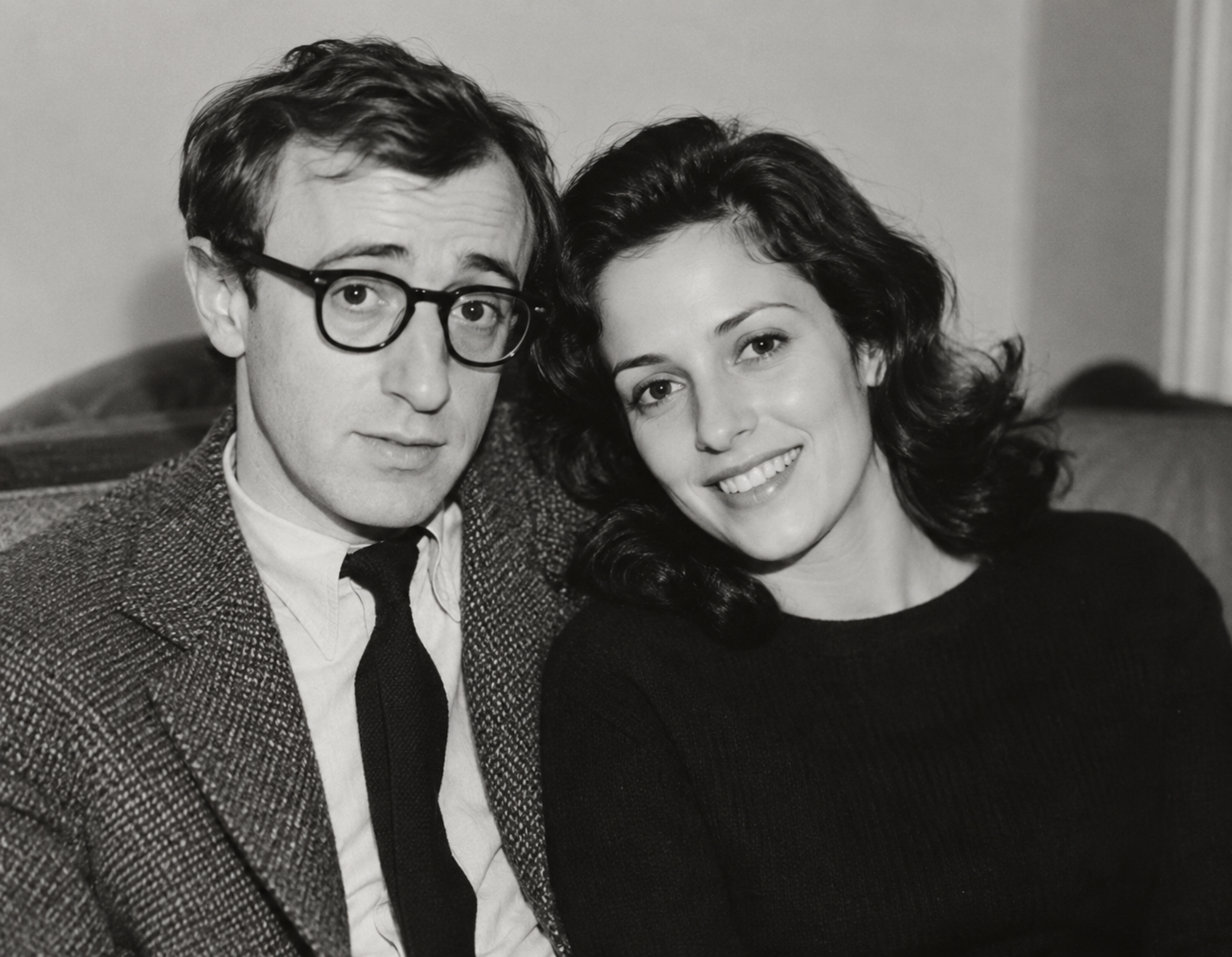
Harlene Rosen: The Story of Woody Allen’s First Wife
Harlene Rosen is best known as the first wife of Woody Allen, but her story belongs to a much earlier period than the films that made him famous. The two married in 1956, when they were very young and Allen was still building a career as a comedy writer. Rosen was studying philosophy at Hunter College and shared his interest in music. Their marriage later ended, and Allen’s jokes about his former wife became a source of serious conflict between them.
Unlike Allen, Rosen never built a public career around film or celebrity. Much of her adult life remained outside media attention. That is why reliable information about her is concentrated around a few periods: her youth, marriage, education, musical interests, divorce, later dispute with Allen, and her rare communication with biographer David Evanier many decades later. This article focuses on those parts of her life rather than filling the quieter years with assumptions.
Quick Bio
| Detail | Information |
|---|---|
| Full Name | Harlene Rosen |
| Also Listed As | Harlene Susan Rosen |
| Nationality | American |
| Known For | First wife of Woody Allen |
| Former Husband | Woody Allen |
| Marriage | 1956 |
| Wedding Date | March 15, 1956 |
| Age at Marriage | Teenager; contemporary accounts differ between 16 and 17 |
| Education | Philosophy student at Hunter College |
| Musical Interest | Piano |
| Children With Woody Allen | None reported |
| Marriage Ended | Early 1960s |
| Major Public Dispute | Defamation lawsuit connected with Allen’s jokes |
| Later Public Connection | Participated in David Evanier’s 2015 biography research |
| Current Occupation | Not publicly detailed |
| Net Worth | No dependable public figure available |
| The strongest historical sources agree on the central outline, although small details differ. A 1972 TIME profile said Rosen was 16 when she married Allen and described the marriage as lasting five years. Other biographical sources place her age at 17. A detailed chronology and jazz biography give March 15, 1956, as the wedding date. |
Who Is Harlene Rosen?
Harlene Rosen entered the public record mainly because of her relationship with Woody Allen. She knew him long before he became the director associated with movies such as Annie Hall, Manhattan, and Hannah and Her Sisters. During their relationship, Allen was an ambitious young comedy writer trying to establish himself in television and entertainment.
Rosen came from the same New York world that shaped Allen’s early years. The Guardian reported that she was the daughter of a shoe-shop owner and that the pair met through Jewish social clubs in Flatbush. The same account describes her as a philosophy student at Hunter College.
Those details matter because they show that Harlene Rosen had her own intellectual interests during the marriage. She was not an actress trying to enter Hollywood, nor was she someone who became famous independently. Her public identity developed mainly because the man she married later became one of the best-known American filmmakers of his generation.
Her Early Life Remained Mostly Outside the Spotlight
There is far less published material about Rosen’s childhood than about Allen’s. That is not surprising. She was not a celebrity when they met, and she did not later turn her connection with Allen into a public career.
The available historical accounts place her in Brooklyn and connect her early relationship with Allen to the social world of Flatbush. The couple were extremely young. Allen had already started writing jokes professionally and was gradually moving into television work. Rosen, meanwhile, was pursuing her education.
Some modern biographies give exact birth years, family names, and other details about her childhood. The older and stronger accounts are much more useful for understanding the period because they focus on events that can be connected to Allen’s early career. They establish Rosen as a teenager when the relationship became serious and as a student during the marriage.
For readers trying to understand Harlene Rosen, this limited record is more useful than a long list of personal details repeated by newer celebrity pages. Her early story becomes clearest at the point where music, education, and Allen’s developing career brought the couple together.
Music Helped Bring Harlene Rosen and Woody Allen Together
Music was part of the relationship before Allen became widely known as a filmmaker.
An account published by All About Jazz says Allen and Rosen first met during a jazz-trio rehearsal. Allen played soprano saxophone, Rosen played piano, and Allen’s friend Elliot Mills played drums. The same account says the pair later married in Hollywood on March 15, 1956.
This detail is interesting because jazz remained an important part of Allen’s life for decades. He became closely associated with the clarinet and continued performing jazz even after becoming a successful filmmaker.
For Harlene Rosen, however, playing piano should not automatically be turned into a professional career description. The historical material shows that she played music and shared that interest with Allen. It does not establish a major professional career as a pianist.
That difference is worth keeping clear. Playing an instrument can be an important part of someone’s life without being their occupation.
The musical connection also gives their early relationship more context. They were two young people spending time together before Allen’s later fame changed the scale of public interest in his personal life.
Marriage in 1956 Came During Allen’s Early Career
The couple married in 1956, during a major transition in Allen’s working life.
According to All About Jazz, Allen had joined NBC’s writer-development program in 1955. He later went to Hollywood as part of a writing group. Rosen and Allen married there on March 15, 1956 before returning to New York.
The marriage therefore did not begin during Allen’s famous filmmaking years. He was still developing the writing and comedy skills that would eventually define his career.
A recent cultural review in The Forward similarly places the wedding during Allen’s NBC period. It notes that Rosen had recently finished high school and later attended Hunter College after the couple returned to New York.
This timeline helps explain why the marriage should not be viewed through the image of Allen that developed much later. The couple were young, and neither was living the life normally associated with an established Hollywood celebrity.
Harlene Rosen was studying while Allen worked on television and comedy projects. Their marriage unfolded alongside those early professional and educational changes.
Her Philosophy Studies Had an Influence on Allen’s Intellectual Interests
One of the most interesting parts of Rosen’s story is her education.
The Guardian describes Harlene Rosen as a philosophy student at Hunter College. It also reports that after marrying her, Allen began making a more serious effort to read major works of literature and philosophy. He arranged for guidance through important books and began spending time studying art at the Metropolitan Museum of Art.
This does not mean Rosen was solely responsible for Allen’s later intellectual interests. It does show that their marriage coincided with an important period in his cultural education.
That connection is particularly interesting in hindsight. Philosophy, literature, morality, death, religion, relationships, and existential questions later became recurring subjects in Allen’s movies.
Rosen’s studies therefore provide useful context for the intellectual environment around Allen during his early twenties.
They also reveal something about Rosen herself that often disappears from short celebrity biographies. She was pursuing an academic interest while her husband was building his entertainment career. Describing her only as a famous director’s former wife misses that part of her early adult life.
The Marriage Became Part of Woody Allen’s Comedy
Allen increasingly turned personal anxiety and relationships into comedy.
A major 1972 TIME profile described his first marriage as one of the areas of life that supplied material for his humor. The profile quoted a divorce joke Allen used when discussing the marriage and described his broader method of transforming uncomfortable experiences into punch lines.
That approach helped create the comic personality audiences came to recognize. Allen often presented himself as anxious, unlucky, insecure, intellectual, and troubled by relationships.
The problem was that jokes based on a real marriage involved another real person.
Harlene Rosen did not have Allen’s growing public platform. Audiences heard his version of married life through routines designed to entertain. Comedy naturally exaggerates situations, changes details, and reshapes real experiences to create a punch line.
For that reason, Allen’s stand-up material is useful for understanding his comedy career, but it should not be treated as a neutral biography of Rosen.
The difference became especially important after the marriage ended, because Allen continued using material connected with his former wife.
Their Marriage Ended in the Early 1960s
The relationship did not last.
Sources differ slightly in the way they date its ending. Some describe the couple as separating around 1959, while commonly used biographical records place the formal divorce in 1962. IMDb, for example, lists the marriage from March 15, 1956, until November 1962.
A 1972 TIME profile described the marriage as lasting five years, showing why different timelines sometimes appear in later accounts.
The important point is that the relationship had ended before Allen became the filmmaker most audiences know today.
Trying to assign one simple reason for the divorce would also oversimplify the available history. Both were very young. Allen’s career was changing quickly. Their personal relationship became difficult, and the public use of marital material added another source of tension.
The aftermath ultimately became more historically visible than the divorce itself. Harlene Rosen objected to the way she was discussed publicly, and that conflict eventually moved beyond private disagreement.
Harlene Rosen and the Defamation Dispute
One of the most frequently discussed events involving Rosen came after Allen began making jokes about his former wife.
The dispute was serious enough to lead to legal action.
A 1991 Los Angeles Times review of Eric Lax’s biography of Woody Allen stated that Rosen had sued Allen and NBC for $1 million, claiming that his jokes had defamed her. The review raised the issue while criticizing the biography for presenting the first marriage almost entirely through Allen’s perspective.
The episode is significant because it shows that Rosen strongly objected to becoming material for someone else’s public comedy.
Allen’s humor often blurred autobiography and performance. Audiences could easily associate jokes with his real relationships even when the material had been exaggerated for entertainment.
For Rosen, that meant parts of her private life were being discussed before audiences she had never chosen to address herself.
The legal dispute remains one of the clearest examples of her asserting control over how she was portrayed publicly.
The Dispute Was About More Than an Unhappy Divorce
It is easy to reduce the legal conflict to two former spouses who disliked each other. The wider issue was more complicated.
A comedian can transform real experiences into jokes. That freedom is central to autobiographical comedy. Yet another person may recognize themselves in the story and feel that the performance damages their reputation.
That tension existed long before social media, but the Harlene Rosen story is an early example of it.
The Los Angeles Times later made an important observation while reviewing Eric Lax’s Allen biography. The reviewer questioned why Rosen’s perspective was missing and noted that the entire relationship was being presented from Allen’s point of view.
That criticism explains why modern readers should be careful when reconstructing the marriage.
Allen gave interviews, performed comedy, made movies, and became the subject of many books. Rosen did not build an equivalent public platform. As a result, far more material survives from his side.
The imbalance does not automatically make Allen’s memories false. It simply means they should not be mistaken for Rosen’s own account of their relationship.
Harlene Rosen Lived Away From Celebrity Culture
After the marriage and public dispute, Rosen largely disappeared from mainstream entertainment coverage.
There is no substantial filmography attached to her name. There is no well-known television career, celebrity memoir, or long series of interviews documenting the following decades.
That makes her very different from many people associated with famous entertainers.
Harlene Rosen did not appear to build a public identity around being Woody Allen’s former wife. As Allen’s career expanded through stand-up, writing, acting, and filmmaking, she remained mostly outside the celebrity world surrounding him.
This also explains why modern searches for her often produce more questions than answers. Readers may want to know where she lives, what career she followed, whether she remarried, or what her finances look like. Major historical and journalistic sources do not provide a detailed account of those subjects.
The absence of that information does not need a dramatic explanation. A person who does not seek a public career can live for decades without leaving the type of media record created by an actor, director, politician, or business leader.
David Evanier Found Her Decades Later
Rosen returned briefly to the story of Allen’s life when author David Evanier researched his 2015 book Woody: The Biography.
Evanier later explained in an interview that he spent more than a year trying to find Allen’s first wife. He eventually reached her, and she sent him a birthday message for Allen’s 80th birthday that appeared in his book.
That contact is important because it came many decades after their difficult marriage and legal conflict.
Kirkus Reviews also noted Rosen among the people Evanier consulted for the biography.
Her participation offered something rare: a later connection to the historical record that did not come entirely through Allen.
It would be wrong to turn one message into a complete account of how she felt about every part of their past. People can remember an early relationship with a mixture of affection, regret, frustration, humor, and distance.
Still, the fact that Rosen responded to Evanier and contributed to the project gives readers a meaningful later chapter in a story that had otherwise remained quiet for decades.
Her Later Perspective Added Balance to the Story
For many years, most public discussion of Harlene Rosen came from sources focused on Woody Allen.
That created an obvious imbalance.
Allen became famous enough for journalists and biographers to document nearly every stage of his career. His memories were repeatedly quoted. His comedy routines were preserved. His personal relationships were examined in books and profiles.
Rosen’s life did not produce a comparable archive.
Evanier’s effort to locate her therefore mattered because it gave the biography access to someone whose perspective had often been missing.
This issue had already been noticed decades earlier. The 1991 Los Angeles Times review of Eric Lax’s biography specifically asked whether Rosen had been interviewed and criticized the book for telling the relationship solely from Allen’s viewpoint.
By 2015, Evanier had managed to contact her.
That does not suddenly give the public a complete biography of Rosen. It does, however, make her more than a silent character in someone else’s life story.
Did Harlene Rosen and Woody Allen Have Children?
There are no children associated with Rosen and Allen’s marriage in the standard biographical accounts of Allen’s family.
Allen’s later family life became extensively covered, particularly because of his relationships with Mia Farrow and Soon-Yi Previn. His first marriage belongs to a much earlier period and is not connected with those later children.
This distinction matters because celebrity family trees can become confusing when several relationships span many decades.
Rosen’s marriage to Allen began in 1956 and ended years before his later family relationships became part of public discussion.
There is also no reason to turn the absence of children from this marriage into speculation about Rosen’s later private life. Public reporting does not offer a detailed family history for her after Allen.
For readers specifically asking whether Harlene Rosen and Woody Allen had children together, the answer is straightforward: the couple are not reported to have had children during their marriage.
Was Harlene Rosen a Professional Pianist?
Rosen’s connection with music is real, but the wording matters.
All About Jazz describes her playing piano during a jazz-trio rehearsal with Allen and Elliot Mills.
That makes piano an interesting part of her early story. It also provides a natural connection with Allen, whose lifelong interest in jazz later became widely known.
However, the available material does not establish Rosen as a famous or long-term professional pianist.
There is an important difference between playing music seriously and earning a public professional identity from it.
The stronger description is therefore that Rosen played piano and shared a musical interest with Allen during their youth.
Her education is better documented as a major activity during the marriage. The Guardian identifies her as a philosophy student at Hunter College, while other historical accounts likewise connect her New York years with philosophy studies.
That combination of music and philosophy gives a more rounded picture of her early life than the simple label “Woody Allen’s first wife.”
What Is Known About Harlene Rosen’s Career?
There is no substantial public career record for Rosen comparable with Allen’s.
During their marriage, the clearest information concerns her education and music. She studied philosophy at Hunter College and played piano. Later sources do not provide a continuous professional biography covering the decades after the divorce.
That means attaching a specific lifelong profession to her would create a misleading impression.
It is possible for someone to have a long working life without appearing in newspapers, entertainment databases, or celebrity profiles. Rosen’s connection with a famous person does not automatically make every later job or life decision a matter of public record.
This is one reason short online biographies can become unreliable. A missing field in a celebrity profile often gets filled with an attractive answer even when the underlying source is weak.
For Harlene Rosen, the useful facts are already interesting enough: she studied philosophy, played music, married Allen before his fame, lived through the early development of his comedy career, and later challenged how she was publicly portrayed.
What Is Harlene Rosen’s Net Worth?
There is no dependable public figure for Rosen’s personal net worth.
This should not be surprising. Net-worth estimates usually require some information about a person’s business interests, salary, property, investments, contracts, or other financial activity. Rosen has not maintained the type of public career that makes those details readily available.
Allen’s later financial success is not evidence of Rosen’s wealth.
Their marriage ended long before many of his most famous films were released. Annie Hall, for example, arrived in 1977, years after the first marriage had ended.
Any modern figure presented as Rosen’s exact fortune therefore needs a clear financial basis. Without one, it adds little value to her biography.
Readers searching for Harlene Rosen are better served by the well-documented history of her marriage, education, musical connection, legal dispute, and later contact with Evanier than by an unsupported dollar figure.
Why So Little Is Known About Her Later Life
The gap between what is known about Rosen and Allen is largely a gap between a private life and a public career.
Allen spent decades creating work that attracted international attention. Interviews, reviews, biographies, profiles, festival appearances, awards, and controversies produced an enormous archive around him.
Rosen followed a different path.
Once their relationship stopped being a current celebrity story, there was little reason for mainstream entertainment media to document her everyday life.
That should shape how her biography is written.
The goal should not be to turn missing information into a mystery. It should be to explain the part of her life that intersects with reliable historical sources and leave the rest alone.
This approach also produces a more accurate picture of Harlene Rosen. She was a young philosophy student with an interest in music who married an aspiring comedy writer. The marriage became difficult, its aftermath entered Allen’s comedy, and Rosen later challenged that public portrayal. Decades afterward, she briefly contributed her perspective to a major biography.
That is already a meaningful story.
Why Her Story Still Attracts Interest
Readers continue searching for Rosen because she belongs to a period of Allen’s life that came before his familiar public image.
She knew him before the major films, Academy Awards, international reputation, and later controversies. Their relationship unfolded while he was learning how to turn writing into a professional career.
Rosen’s education also adds an unexpected dimension. The Guardian connects her philosophy studies with Allen’s growing interest in serious literature, philosophy, and art.
Then there is the comedy dispute.
A private relationship becoming public material is still a familiar issue today. Comedians, memoir writers, podcasters, and social-media creators regularly tell stories involving former partners or relatives. Rosen’s conflict with Allen shows that this tension existed long before the internet.
Finally, her later privacy makes the story unusual. Rather than remaining attached to Allen’s fame, she largely disappeared from celebrity coverage.
For that reason, the most interesting thing about Harlene Rosen may be the contrast between her short period in a famous person’s public story and the long private life that followed it.
Frequently Asked Questions
Who is Harlene Rosen?
Harlene Rosen is Woody Allen’s first wife. They married in 1956, before Allen became a famous filmmaker. She studied philosophy at Hunter College and also played piano.
When did Harlene Rosen marry Woody Allen?
The couple married on March 15, 1956, during Allen’s early career as a comedy writer.
How old was Rosen when she married Woody Allen?
She was a teenager. A 1972 TIME profile described her as 16, while other biographical accounts give her age as 17. Allen was around 20.
Did Rosen sue Woody Allen?
Yes. A Los Angeles Times review reported that Rosen sued Allen and NBC for $1 million, claiming his jokes defamed her.
Did Woody Allen and his first wife have children?
No children are reported from their marriage.
What happened to Rosen after the divorce?
She largely lived outside public attention. One notable later appearance in the historical record came in 2015, when she communicated with biographer David Evanier for his book about Allen.
Conclusion
Harlene Rosen was part of Woody Allen’s life before the career that made him internationally famous. She was a young philosophy student who played piano, married an aspiring comedy writer in 1956, and experienced the difficult early years of a relationship that later became material for Allen’s public humor.
Her story also has importance beyond the marriage. The dispute over Allen’s jokes shows what can happen when one person’s private relationship becomes another person’s entertainment. Rosen eventually challenged that portrayal through legal action, then spent most of the following decades outside celebrity culture.
Her rare contact with David Evanier in 2015 added a later chapter without turning her into a public figure. That balance is important when writing about Harlene Rosen today. The available history tells us a meaningful amount about her youth, education, music, marriage, and conflict with Allen. The rest of her life remained largely her own.